

TouchTalk Plus
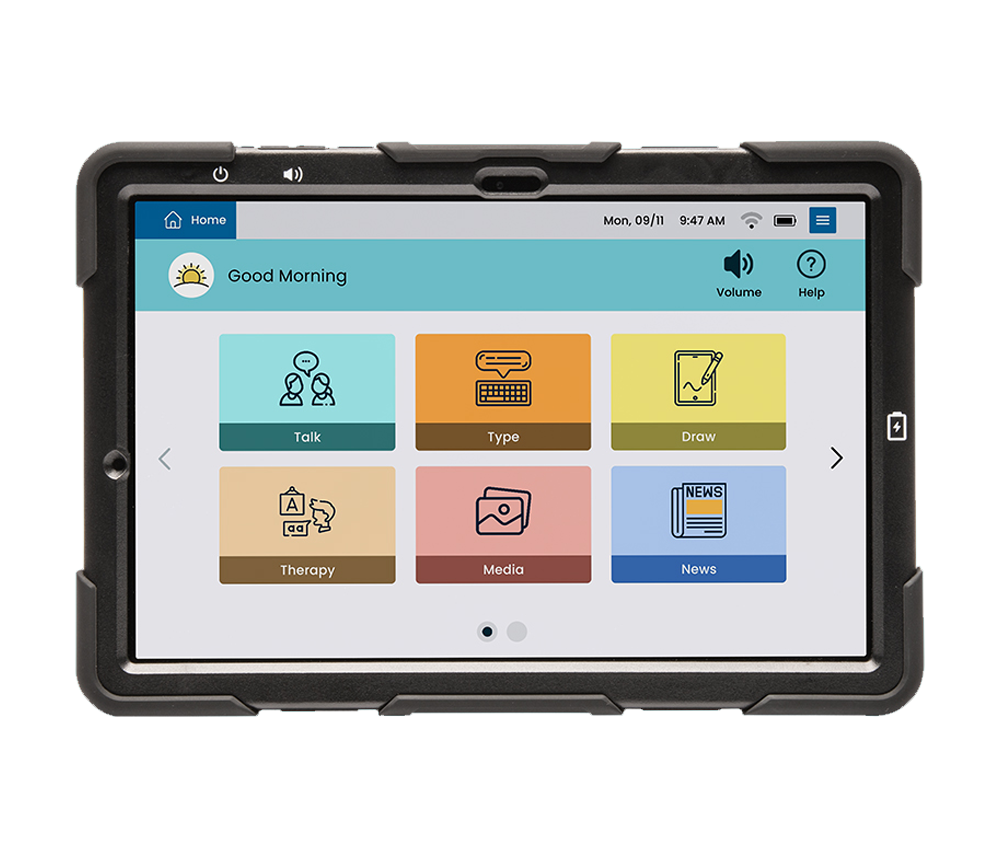
Tablet-based tool designed for for easy, effective communication
The Lingraphica TouchTalk Plus is a large, all-in-one tablet for people with speech and language challenges. Its brilliant edge-to-edge display makes it easy to navigate, while offering powerful tools to help support expression, improve speech, and strengthen connection.
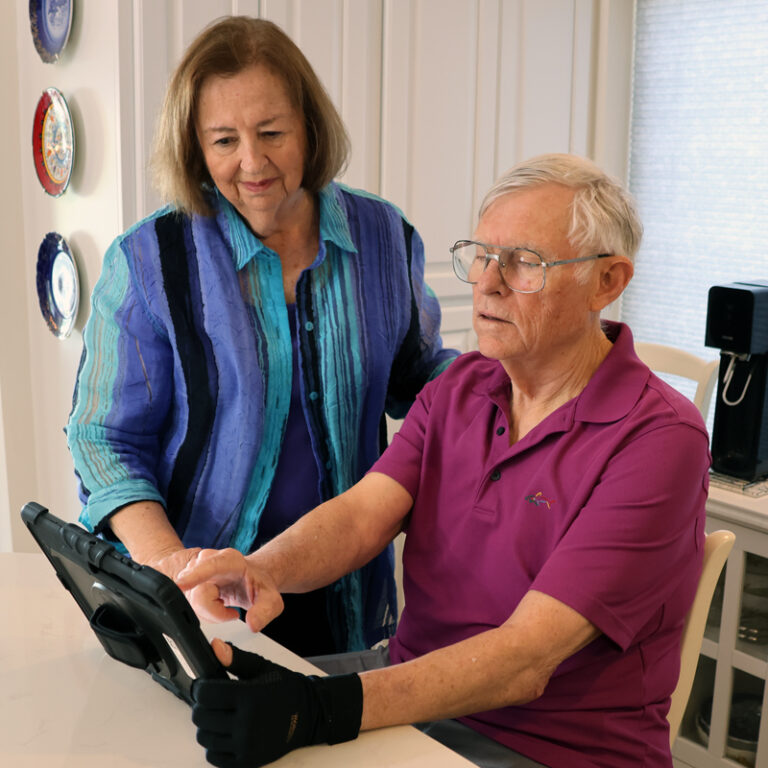
Large, easy to see display
Features a stunning 12.4″ edge-to-edge display that brings every word and image to life. It’s Lingraphica’s largest device.
Powerful Speakers
Comes with 92.4dB speakers.
High Speed Processor and Impressive Storage
High-speed processor and an impressive 128GB of storage.
Specs
- Dimensions: 11.22″ x 7.28″ x 0.22″
- Weight: 1.27 lbs.
- Battery life: Up to 9 hrs
- Rear Camera Resolution: 13MP
- Front Camera Resolution: 5MP
- On-screen keyboard and touchscreen navigation
- WiFi and Bluetooth device ready
- Zoom®, Google Chrome™, and email
Powered by Hub
Lingraphica devices are powered by Hub. Hub is a simple platform that brings communication, therapy, and connection into one seamless experience. It offers flexible ways to express yourself, build communication skills, and strengthen connections. The result: greater communication confidence and independence through everyday interaction. Whether someone is newly navigating communication challenges or exploring support options after years of adapting, the TouchTalk™ Plus offers flexible tools to support expression, build confidence, and foster independence.
Who can benefit from this AAC Device?
All Lingraphica AAC devices are designed to support people with a wide range of communication challenges. These challenges may result from acquired speech or language conditions like aphasia or apraxia following a stroke or brain injury, conditions present since birth such as autism or developmental disabilities, or progressive diagnoses like primary progressive aphasia or Parkinson’s disease.